A custom shopping bag order goes wrong in predictable ways: the bag is too shallow for the product, the paper buckles under a normal load, or the handles tear on the second use. Every one of those is a spec decision made before the art was ever approved. Three numbers and one component decide whether the bag works: the finished dimensions, the paper weight, and the handle. Here is how to set each of them deliberately rather than accepting whatever a template defaults to.
Read the dimensions the right way
Custom bag sizes are written as width by height by depth, in inches, and the order matters. Width is the face you print on, height is the wall from base to the top opening, and depth, the number buyers most often overlook, is the gusset: the side panel that shows how far the bag expands from front to back. The gusset sets the usable volume and whether a boxed or folded product actually drops in. A bag listed as 8 by 10 by 4 has a four-inch base, which swallows a folded garment easily; the same face at a two-inch gusset would fight you. When you request a custom size, give all three figures and state which dimension is the printable face, because a supplier reading them in a different order will make a bag that fits nothing you sell.
Match the footprint to the product
Start from the largest item that has to fit and work outward, leaving room for tissue and a folded top. Small gift and jewelry footprints cluster around 5 by 5 by 3 inches; standard retail bags for cosmetics, books and compact goods sit near 8 by 10 by 4; apparel bags run taller and deeper, roughly 10 by 14 by 5; and the large clothing and blanket sizes reach 16 by 12 by 6 and beyond. The chart below plots common footprints so you can see how width, height and gusset scale together rather than picking a size off a name alone.
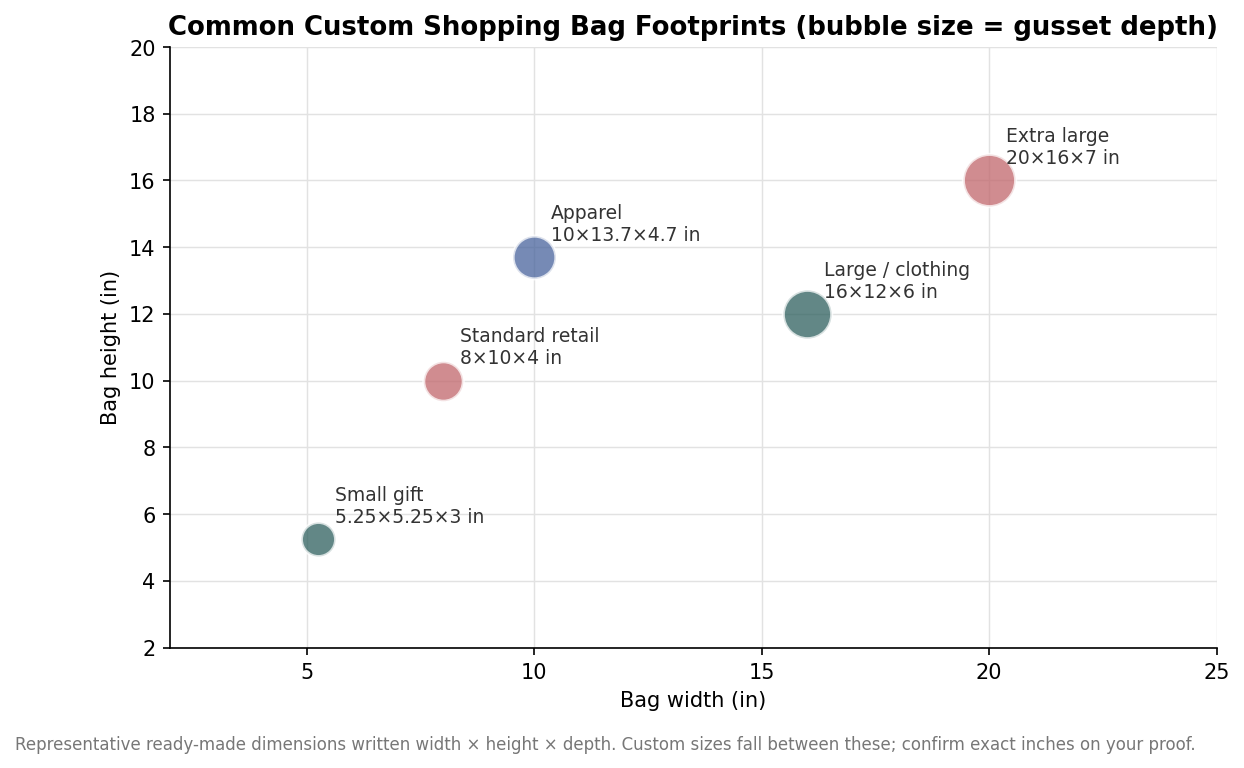
Naming conventions vary between suppliers, so treat a size name as a starting point and confirm the actual inches. If your product line spans very different shapes, two or three stocked sizes usually cover a catalog better than one compromise bag that fits everything poorly.
Choose paper weight by what goes inside
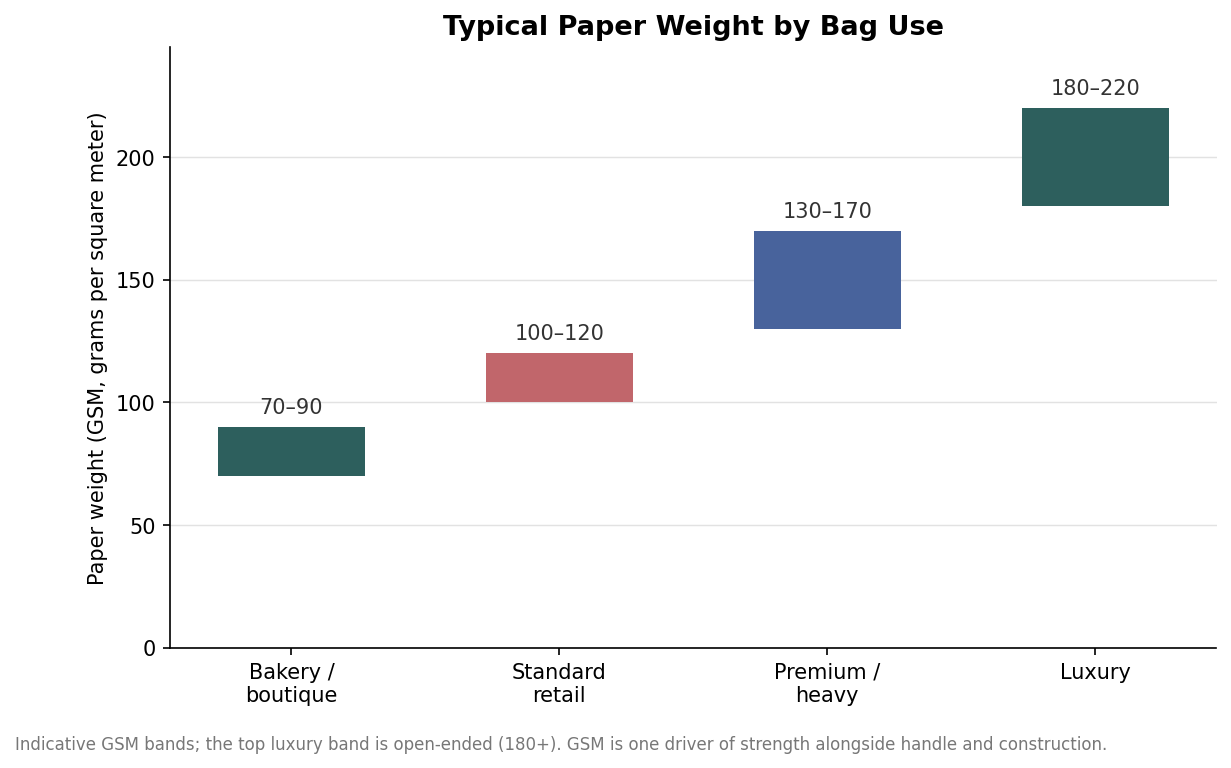
Paper weight is quoted in GSM, grams per square meter, and it is the single biggest lever on how a bag feels and how much it carries. Lighter bakery and boutique bags run about 70 to 90 GSM, fine for small, light goods. Standard retail bags land at 100 to 120 GSM, the workhorse range for most stores. Heavier and premium bags move to 130 to 170 GSM when the contents have real weight or the brand wants a substantial hand-feel, and luxury packaging climbs to 180 GSM and up. Higher GSM means thicker, stronger paper, but it is not the whole story: a heavy sheet with a weak handle attachment still fails. Match the weight to the actual product rather than defaulting to the thickest, most expensive option, and you keep the bag both reliable and affordable.
Paper weight travels with two related choices: stock and finish. Natural kraft is the economical, recyclable default and reads as understated or eco-minded, while a white or coated stock gives cleaner, brighter color reproduction for detailed logos. A finish sits on top of that: an uncoated bag is matte and writable, a matte laminate resists scuffing and fingerprints, and a gloss laminate lifts color saturation at the cost of a shinier, less natural look. Lamination also adds a little stiffness and moisture resistance, which can matter for grocery or outdoor-market use. Decide stock and finish alongside GSM, because the three together, not the weight number by itself, are what a shopper feels when they pick the bag up.
The handle sets the tier and the load
Twisted paper handles are the budget standard, machine-made and glued in, and they suit light to medium loads for delis, bakeries and gift shops. Die-cut handles, punched straight into the bag wall, cost the least because they add no separate part, but they can dig into the hand under weight and are best for lighter takeout and trade-show use. Rope handles, in cotton or polypropylene, are the strongest and the most premium, which is why jewelers, boutiques and hotels reach for them. Twill or ribbon handles sit in the same upscale tier, stronger than twisted paper and available in a wide range of colors for brands that want the handle itself to read as finished. The handle is also a load decision, not just a look: pair a heavy product with a die-cut hole and you have designed the failure in from the start.
Put the spec together before you order
Before you approve anything, write the bag down as a single spec: finished width by height by depth, paper GSM, paper type and finish, handle type, and the print method and colors. Confirm which face carries the logo and how the artwork wraps around the gusset if it does. Ask about the minimum order quantity and the production lead time up front, since custom bags are made to order and both can be longer than stock packaging, particularly for rope handles or specialty finishes that add a step. Where a supplier quotes a load rating or a lead time, treat it as indicative and confirm it against your own heaviest product and your real deadline. A bag specified this way arrives fitting the product, carrying the weight, and looking like the brand, which is the whole point of ordering custom in the first place.